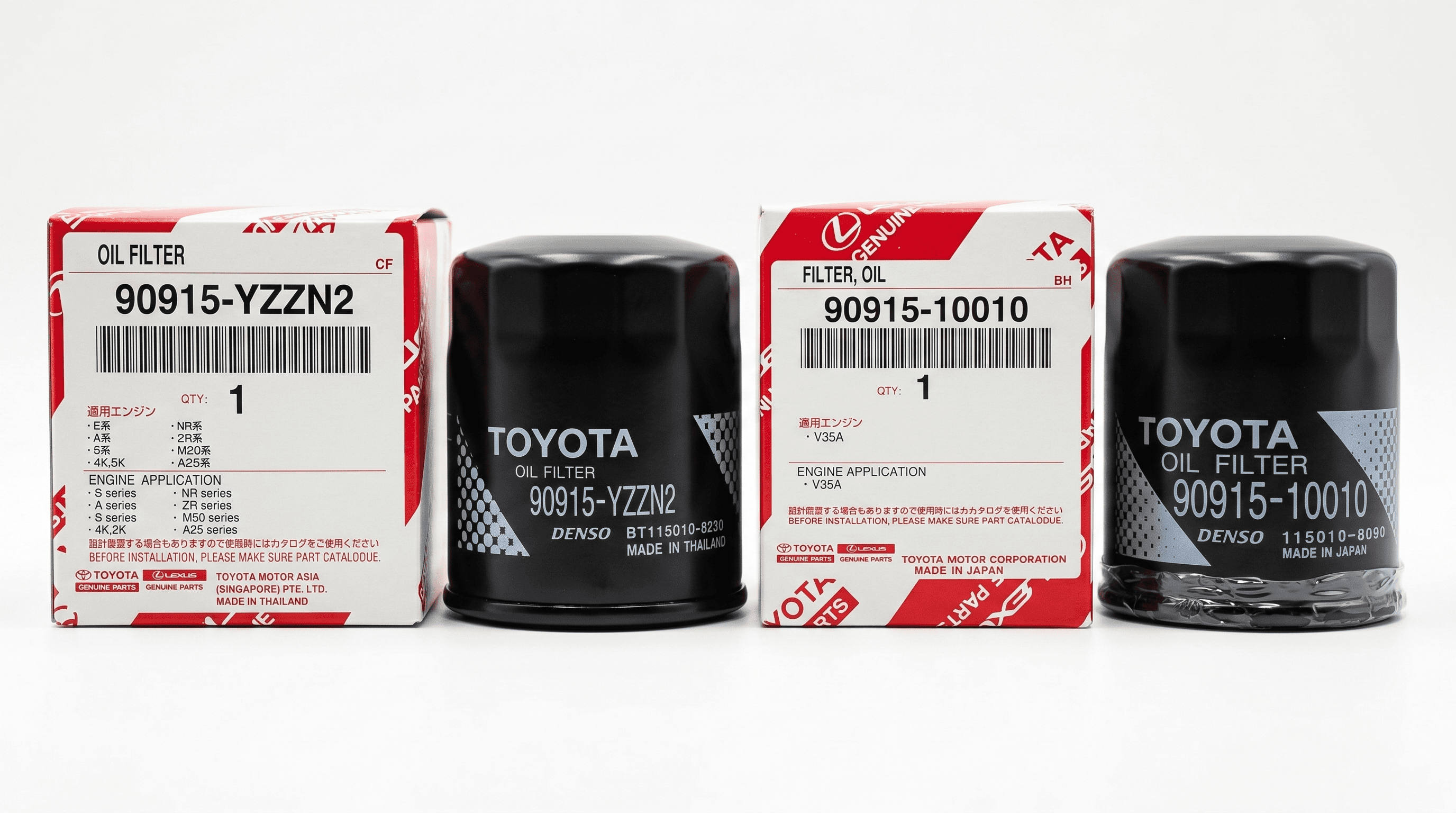
The Malaysian parts market has a characteristic that confuses many buyers and frustrates many honest sellers: the same brand name on two different boxes does not guarantee the same product inside them.
This is not primarily a counterfeiting problem, though counterfeiting exists. It is a distribution architecture problem. The way parts move from manufacturer to market creates conditions where the same brand can carry different quality assurances, different warranty backing, and in some cases, different actual specifications — depending entirely on the route the product took to reach the shelf.
How authorised distribution works
Major parts manufacturers — Bosch, Denso, Gates, NGK, Brembo, and others — operate through authorised distributor networks in each market. In Malaysia, each of these brands has designated national distributors who import directly from the manufacturer, maintain the required storage conditions, carry lot traceability documentation, and provide the warranty backing the brand guarantees.
When you purchase through this channel — from an authorised distributor or from a retailer who sources from one — you are buying the brand's full assurance package. The price reflects this. The documentation exists. If a defect is discovered in a production lot, the traceability exists to identify and recall affected units.
Where the channel breaks
The authorised distribution network is not the only way parts enter Malaysia. Several parallel channels exist, each with different implications for the buyer.
The first is genuine parallel import. Parts manufactured and sold legitimately in another market — Japan, Australia, the Middle East, or other Southeast Asian countries — are purchased and imported outside the authorised Malaysian channel. The product may be physically genuine. The storage history, lot documentation, and Malaysian warranty backing are absent.
The second is genuine product from non-current stock. Parts that have sat in a warehouse for an extended period — potentially with incorrect storage temperature, humidity, or handling — may reach the Malaysian market through secondary channels. For rubber components, electronic parts, and fluid-sensitive items, storage conditions are not a minor detail. They affect the product's service life from the day you install it.
The third is the most difficult to identify: repackaged product. Genuine parts are removed from original packaging and sold in generic or alternative branded packaging. The buyer sees a recognisable brand name, purchases on that basis, and has no way to verify whether the product they received is what was described.
The signals that distinguish a reliable source
Three things separate a seller operating within the authorised channel from one who is not.
Documentation. A seller who can produce a purchase invoice or distributor certificate for the products they stock has a verifiable paper trail. This is not a high bar — any legitimate operator who sources through authorised channels has this documentation as a standard part of their business operation. A seller who cannot or will not provide it cannot verify the chain of custody of what they are selling.
Consistency. A seller who has been stocking the same brands from the same sources over time, and whose customers can speak to that consistency through reviews that describe specific products and experiences, has demonstrated something through practice. The accumulation of real transaction history is harder to manufacture than a claim.
Accountability. A seller who stands behind what they sell — who will address a fitment issue, who will replace a defective part, who has a process for handling product claims — has built their business around accountability rather than around single transactions. In a market where information asymmetry is the default, accountability is the practical substitute for verification.
What this means for the buyer
For low-cost consumables, the risk of an unauthorised channel is lower. A cabin filter sourced from a parallel import may perform identically to one from the authorised distributor. The stakes are limited.
For safety-critical components and electronics, the distribution channel matters. A brake pad sourced outside the authorised chain lacks the warranty and lot traceability that the authorised channel provides. An electronic sensor that was stored incorrectly may function perfectly for six months and then fail. These are not theoretical concerns in a market with the distribution complexity the Malaysian aftermarket has.
The practical guidance is not to avoid all non-authorised-channel products. It is to know which category of part you are purchasing, to source from sellers whose accountability is demonstrable, and to ask direct questions about product provenance when the stakes are high enough to warrant it.
Brand recognition is a starting point, not a guarantee. The assurance behind a brand name depends on the channel through which the product reached you. Authorised distribution provides documentation and warranty backing that parallel channels do not. For safety-critical parts, the channel is part of what you are buying.