

The service schedule in your car manual was written by engineers working in a specific context. That context was almost certainly not Malaysia.
Japanese, Korean, and European manufacturers calibrate their recommended intervals against the conditions of their home markets — temperate climates, highway-heavy driving patterns, fuel quality norms, and ambient temperatures that are significantly lower than what a car experiences sitting in Kuala Lumpur traffic at 2pm in March.
The result is that following your manufacturer's schedule precisely, in Malaysian conditions, often means servicing your car less frequently than the conditions actually require. This is not the manufacturer's fault. The schedule is not wrong for the conditions it was written for. It is just not written for here.
What Malaysian conditions do to a car
Three factors compound in Malaysia in ways that accelerate wear faster than temperate-market schedules account for.
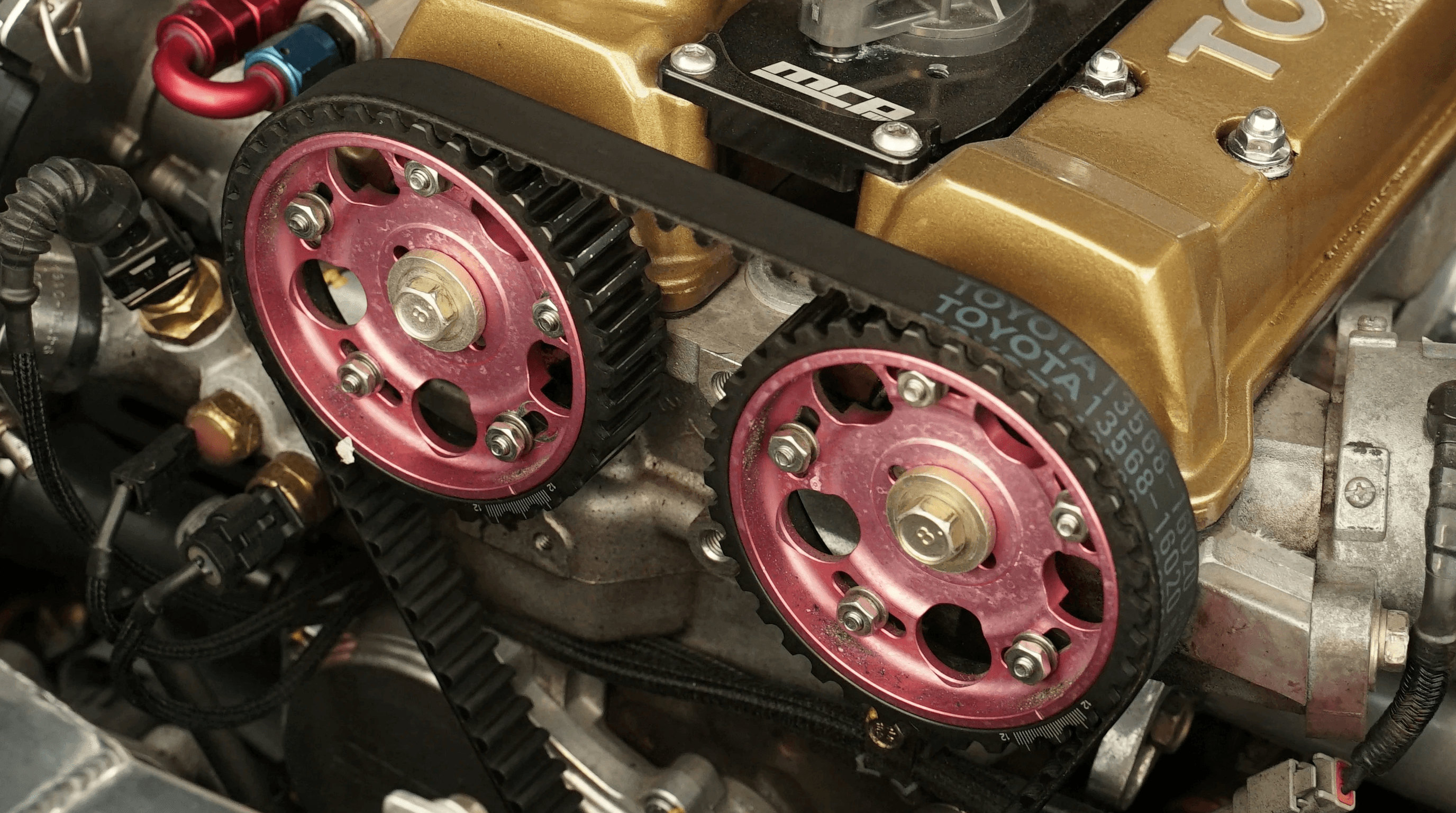
Heat is the first. Average ambient temperatures in Malaysia sit between 26 and 35 degrees Celsius. Engine oil degrades faster in sustained heat. Coolant works harder. Rubber components — belts, hoses, seals — age more quickly when the base temperature is already high before the engine even starts. A car in Kuala Lumpur experiences thermal stress that a car in Tokyo or Seoul simply does not.
Stop-start urban driving is the second. Malaysian city driving is dominated by congestion. Short trips, frequent stops, idling in traffic — this pattern is hard on engines because the car never reaches the sustained operating temperature that burns off moisture and combustion byproducts in the oil. Oil that is used in this pattern carries more contamination per kilometre than highway oil of the same age.
Humidity is the third. The moisture content in Malaysian air is high year-round. Brake components, air filters, and electrical connections are all affected by sustained humidity exposure in ways that schedules written for drier climates do not fully account for.
What this means in practice
The following are common areas where Malaysian driving conditions typically require shorter intervals than manufacturer schedules recommend. These are general guidelines — your specific car model, driving pattern, and oil type will all affect the actual numbers. When in doubt, ask your mechanic to assess the condition of the item directly rather than relying on the interval alone.
Engine Oil | Manufacturer intervals for full synthetic oil often run to 10,000–15,000 km. In Malaysian urban driving conditions, 7,500–10,000 km is a more realistic interval. If you do predominantly short trips and city driving, err toward the shorter end. |
Air Filter | Manufacturers often recommend 20,000–30,000 km intervals. Malaysian roads — particularly in areas with construction, dust, or heavy traffic — can clog filters significantly faster. Inspect at 15,000 km and replace when visibly dirty rather than waiting for the scheduled interval. |
Cabin Filter | Overlooked by most car owners, but particularly relevant in Malaysia where air quality in urban areas and haze seasons puts real load on the filter. Inspect every 12–15 months regardless of mileage. |
Coolant | Manufacturer intervals for coolant replacement typically run to 40,000–60,000 km or 2 years. In Malaysia's sustained heat, have the coolant concentration and condition checked at every major service. Degraded coolant in high-ambient-temperature conditions is a more serious problem than it would be in cooler climates. |
Brake Fluid | Brake fluid is hygroscopic — it absorbs moisture from the air. In Malaysia's humidity, it absorbs moisture faster than in drier climates. Replace every 2 years regardless of manufacturer interval recommendations. |
The haze factor
During haze periods, which arrive with some regularity in peninsular Malaysia, air quality drops significantly. If your car is used regularly during an extended haze period, inspect your air filter sooner than your scheduled interval. A clogged air filter reduces engine efficiency and fuel economy noticeably — the car will tell you through performance, but by then the filter has been working hard for a while.
What to tell your workshop
When you bring your car in for a service, it is worth stating your driving pattern directly. "I do mostly city driving in KL" gives the mechanic relevant information that changes which items deserve closer inspection. A mechanic who knows your pattern can give you a more accurate assessment than one who is applying a generic interval to an unknown car.
You do not need to arrive with a prepared speech. A sentence or two about where and how you drive is enough. The good mechanics will use it. The ones who don't — who apply the same checklist regardless — are giving you less than you came for.
Your owner's manual is a starting point, not a final answer. Malaysian conditions — the heat, the traffic, the humidity — place real additional demand on your car's components. Service to the condition of the part, not just the interval on the schedule.